Enlighten Infosystems Logo
Enlighten. Infosystems
Home
Blog About Us Contact

Our Tech Blog

Emerging Tech Trends You Need to Know
28 Apr, 2026

Emerging Tech Trends You Need to Know

Emerging Tech Trends You Need to KnowThe technology landscape is evolving faster than ever. New frameworks, AI breakthroughs, and decentralized systems are reshaping every industry. At Enlighten Infosystems, we don't just build with these technologies — we train the next generation of developers, designers, and data professionals to master them. In this blog, we break down the latest trends across nine high-demand tech domains, their real-world applications, and how our hands-on training programs prepare you for each one.1. Full Stack DevelopmentLatest Trends (2025–26) Server Components & Streaming: React Server Components (RSC) and Next.js 15 App Router now allow rendering on the server with seamless client hydration — drastically improving performance. Edge Computing: Deploying full stack apps on edge networks (Cloudflare Workers, Vercel Edge) reduces latency by running logic closer to the user. AI-Assisted Development: Tools like GitHub Copilot, Cursor, and Claude Code are embedded in daily dev workflows, generating boilerplate, tests, and documentation. Monorepo Architecture: Large-scale teams use tools like Turborepo and Nx to manage multiple apps and shared packages from a single repository. Type-Safe Full Stack: End-to-end type safety with TypeScript + tRPC + Prisma is now an industry standard for reliable, scalable codebases. Real-World Applications Building multi-page corporate websites, customer portals, and SaaS dashboards Developing internal enterprise tools: HR portals, inventory systems, procurement platforms E-commerce platforms with real-time cart, payment integration, and order management Startup MVPs — full product in a single stack without handoff bottlenecks What Skills You Enhance at Enlighten Infosystems HTML5, CSS3, JavaScript (ES6+) fundamentals React.js with hooks, context, and routing Node.js + Express.js REST API development MySQL & MongoDB database design Deployment on cloud platforms (AWS, DigitalOcean) Live project development in an agile environment 2. MERN StackLatest Trends (2025–26) React 19 & Concurrent Features: Automatic batching, transitions, and Suspense boundaries make React apps faster and more responsive without extra code. MongoDB Atlas Vector Search: MongoDB now supports vector embeddings natively, enabling AI-powered search and recommendations directly in the database layer. Serverless Node.js: Running Express APIs as serverless functions (AWS Lambda, Vercel Functions) eliminates server management overhead. Real-Time First Architecture: WebSockets and Socket.io are being replaced by more scalable solutions like SSE (Server-Sent Events) and Ably for real-time features. Full-Stack Testing with Playwright & Vitest: End-to-end and unit testing are now deeply integrated into MERN CI/CD pipelines. Real-World Applications Social networking platforms with real-time feeds and notifications Online learning management systems (LMS) with progress tracking Marketplace platforms: multi-vendor, inventory, review systems Real-time collaboration tools: shared whiteboards, project trackers Healthcare appointment and patient record portals What Skills You Enhance at Enlighten Infosystems MongoDB schema design, aggregation pipelines, Atlas cloud Express.js middleware, authentication, and error handling React component architecture, Redux / Zustand state management Node.js asynchronous programming and REST API design Socket.io for real-time features Building and deploying a full MERN application from scratch 3. Mobile Application DevelopmentLatest Trends (2025–26) Flutter 3.x — Single Codebase, Native Performance: Flutter continues to dominate cross-platform development, with improved Impeller rendering engine for 60/120fps animations. AI On-Device Inference: Apps now run lightweight ML models on-device using TensorFlow Lite and Core ML, enabling smart features without internet connectivity. App Clips & Instant Apps: Users can use a fraction of an app without a full install — driving conversion in commerce and service apps. Super App Architecture: Single apps integrating payments, services, messaging, and commerce (inspired by WeChat) are becoming a global trend. Privacy-First Development: iOS 18 and Android 15 introduce stricter permissions and privacy manifests — developers must build with data minimization in mind. Real-World Applications On-demand delivery and logistics apps with GPS tracking Healthcare apps: teleconsultation, prescription management, vitals monitoring FinTech apps: UPI integration, personal finance trackers, loan management EdTech apps: live classes, quiz engines, course progress tracking Enterprise field-service apps for technicians and sales reps What Skills You Enhance at Enlighten Infosystems React Native fundamentals — components, navigation, state Flutter & Dart — widget tree, state management (Bloc/Riverpod) REST API integration, async data fetching, error handling Push notifications, local storage, device sensors Publishing to Google Play Store and Apple App Store Hands-on internship building a live mobile product 4. Python / Flask DevelopmentLatest Trends (2025–26) Microservices Architecture: Flask remains highly relevant for building lightweight, independent microservices deployed in containerized environments like Docker and Kubernetes. HTMX Integration: A growing trend of using HTMX with Flask templates to build dynamic, single-page application (SPA) experiences without writing heavy JavaScript. Async Support in Flask: With native async/await support introduced in recent Flask versions, developers can now handle concurrent I/O-bound requests much more efficiently. FastAPI for High-Performance APIs: While Flask is excellent for rapid development and monolithic backends, FastAPI is gaining preference for pure, high-throughput backend services and AI microservices due to its automatic OpenAPI docs and speed. Real-World Applications Building and serving machine learning models and AI pipelines via REST APIs Developing backend services for mobile and web applications Creating automated web scrapers, cron jobs, and data extraction pipelines Building internal admin dashboards and task automation scripts What Skills You Enhance at Enlighten Infosystems Python programming: OOP, data structures, file handling Flask basics: routing, Jinja2 templates, REST APIs, and authentication Database integration using SQLAlchemy (ORM) and SQLite/PostgreSQL Consuming and integrating third-party APIs and handling JSON data Building and serving a functional web application or API — live project 5. Artificial Intelligence / Machine Learning (AI / ML)Latest Trends (2025–26) Large Language Model (LLM) Integration: Developers now build apps with OpenAI, Anthropic, and Gemini APIs — RAG pipelines, summarization engines, and copilots are common production use cases. LangChain & LlamaIndex: Frameworks for chaining LLM calls with retrieval, memory, and tools are becoming the backbone of AI application development. AutoML & No-Code ML: Platforms like Google AutoML and H2O.ai allow faster model iteration, while data scientists focus on problem framing and feature engineering. Responsible AI & Model Monitoring: MLOps practices — drift detection, fairness audits, explainability — are now non-negotiable in enterprise AI deployments. Real-World Applications Predictive maintenance systems in manufacturing AI-powered chatbots and customer support automation Resume screening and HR talent analytics Medical image analysis and diagnostic support tools Fraud detection systems in banking and insurance Demand forecasting for retail and supply chain What Skills You Enhance at Enlighten Infosystems NumPy, pandas — data manipulation and analysis scikit-learn: regression, classification, clustering, model evaluation Deep learning fundamentals with TensorFlow / Keras Building end-to-end ML models on real-world datasets 6. Power BILatest Trends (2025–26) Copilot in Power BI: Microsoft has embedded AI-powered natural language querying — users ask questions in plain English and get charts automatically generated. Direct Lake Mode: Power BI can now query data directly from Microsoft Fabric / OneLake without importing, enabling real-time analytics on massive datasets. Paginated Reports + Storytelling: Combining pixel-perfect paginated reports with interactive storytelling dashboards for boardroom-ready outputs. Composite Models & Hybrid Tables: Mixing DirectQuery and Import modes in a single dataset unlocks greater flexibility in enterprise data architecture. Power BI Embedded: Businesses embed analytics directly into customer-facing SaaS products — analytics is no longer a back-office function. Real-World Applications Executive KPI dashboards — revenue, margins, headcount in real time Manufacturing OEE (Overall Equipment Effectiveness) tracking Retail chain performance: store-by-store sales, stock turnover HR dashboards: attrition risk, hiring funnel, training completion Financial reporting with automated monthly/quarterly snapshots What Skills You Enhance at Enlighten Infosystems Power BI Desktop interface and report canvas Data import, Power Query (M language) transformations Data modeling: relationships, star schema, role-playing dimensions DAX fundamentals: calculated columns, measures, time intelligence Designing interactive dashboards with slicers, drill-throughs Publishing to Power BI Service and embedding reports 7. Data ScienceLatest Trends (2025–26) Synthetic Data Generation: With privacy regulations tightening, companies use generative AI to create realistic synthetic datasets for training models. Real-Time Feature Stores: Platforms like Feast and Tecton standardize how features are computed and served both in training and production. dbt (Data Build Tool): SQL-based data transformation is now the standard in modern data stacks, with dbt enabling version-controlled, tested pipelines. Polars over pandas: The Polars DataFrame library, written in Rust, processes large datasets 5–20× faster than pandas and is rapidly gaining adoption. AI Data Labeling: Tools like Scale AI and Label Studio automate and crowdsource the annotation of training data at scale. Real-World Applications Customer segmentation for targeted marketing campaigns Churn prediction models for SaaS and telecom companies Price optimization engines for e-commerce and airlines Supply chain disruption forecasting Social media sentiment analysis for brand monitoring What Skills You Enhance at Enlighten Infosystems Statistical foundations: distributions, hypothesis testing, correlation Data cleaning and EDA with pandas, matplotlib, seaborn Machine learning pipeline: feature engineering, model selection, cross-validation Unsupervised learning: clustering, dimensionality reduction (PCA, t-SNE) Time series analysis and forecasting Capstone project: end-to-end data science solution on real datasets 8. UI / UX DesignLatest Trends (2025–26) AI-Generated UI: Tools like Figma AI, Uizard, and Galileo AI generate wireframes and layouts from text prompts — designers curate and refine. Spatial Design for AR/VR: With Apple Vision Pro and Meta Quest 3, UI/UX designers are learning 3D interface design, depth perception, and gaze-based interaction. Variable Fonts & Fluid Typography: Adaptive typography that responds to screen size and user preferences is replacing static type scales. Accessibility-First Design: WCAG 3.0 compliance is now a legal requirement in many markets. Dark Mode as a Design System Decision: Dark mode is no longer an afterthought — it is planned as a parallel system at the design token level. Real-World Applications Redesigning legacy enterprise software for modern usability and efficiency Designing mobile app onboarding flows that maximize activation rates Creating e-commerce UX that improves add-to-cart and checkout conversion Building design systems and component libraries for engineering teams UX research for product discovery — user interviews, journey mapping, usability testing What Skills You Enhance at Enlighten Infosystems Design thinking methodology and UX research techniques Wireframing and information architecture in Figma Prototyping and interactive flow creation Visual design principles: typography, color theory, grid systems Design system creation — components, tokens, documentation Usability testing and presenting design decisions to stakeholders 9. Blockchain & Web3 EcosystemLatest Trends (2025–26) Layer 2 Scaling Solutions: Networks like Optimism, Arbitrum, and zkSync process thousands of transactions per second at a fraction of Ethereum mainnet gas fees. Zero-Knowledge Proofs (ZKPs): ZK technology allows verifying information without revealing it — enabling privacy-preserving identity, voting, and financial systems. Real-World Asset (RWA) Tokenization: Institutions are tokenizing treasury bonds, real estate, and private equity on-chain. Account Abstraction (ERC-4337): Smart wallets that allow gas-less transactions and social recovery are dramatically improving the blockchain user experience. Cross-Chain Interoperability: Protocols like LayerZero and Chainlink CCIP allow assets and messages to move seamlessly between different blockchains. DeFi 2.0 — Institutional Adoption: Established banks and asset managers are building DeFi products with compliance layers. SocialFi: Social media platforms built on blockchain where users earn tokens for content — Farcaster, Lens Protocol, and Friend.tech are leading examples. GameFi & Onchain Gaming: Fully onchain games have game logic on-chain, enabling player-owned economies and provably fair mechanics. Decentralized Storage: IPFS, Arweave, and Filecoin are replacing centralized file hosts for NFT metadata, DApp frontends, and long-term data archival. Web3 UX Abstraction: The next wave of Web3 products hides blockchain complexity entirely — users sign in with email, pay in fiat, and never see a wallet address. Real-World Applications Supply chain transparency — tracking goods from farm to shelf with immutable records Digital identity and credential verification without centralized databases Automated settlement in trade finance using smart contracts Healthcare record sharing between providers with patient-controlled access Loyalty and rewards programs with tokenized points NFT marketplaces for digital art, event tickets, and real-world asset ownership Decentralized finance: lending, borrowing, and yield farming without banks DAO governance platforms for community-driven organizations Creator economy platforms where fans directly support and own a share of creators Blockchain-based voting systems for transparent, tamper-proof elections What Skills You Enhance at Enlighten Infosystems Blockchain fundamentals: consensus, cryptography, distributed ledgers Ethereum ecosystem: accounts, transactions, gas, EVM Solidity smart contract development and testing (Hardhat / Foundry) Smart contract security — reentrancy, overflow, access control Deploying contracts on testnets (Sepolia, Mumbai) Web3 ecosystem overview: wallets, networks, DApps, and protocols ethers.js / wagmi: connecting DApp frontends to blockchain NFT standards: ERC-721, ERC-1155 — minting and metadata DeFi concepts: AMMs, liquidity pools, staking mechanics MetaMask and WalletConnect integration Building and deploying a full Web3 DApp — live capstone project ConclusionThe future of technology is no longer on the horizon—it is already here. Whether you are building intelligent AI-driven microservices, crafting seamless cross-platform mobile experiences, unlocking insights from massive datasets, or architecting decentralized Web3 ecosystems, the demand for highly skilled professionals has never been greater. However, mastering these rapidly evolving trends requires more than just reading about them; it demands hands-on execution and real-world problem-solving. At Enlighten Infosystems, we bridge the gap between academic theory and industry readiness. By focusing on practical, live-project training across these high-demand domains, we empower you to transition from a passionate learner to a highly capable, future-ready tech professional.

General
Read
Why Custom ERP Software Development Is the Right Investment for Your Business
08 Apr, 2026

Why Custom ERP Software Development Is the Right Investment for Your Business

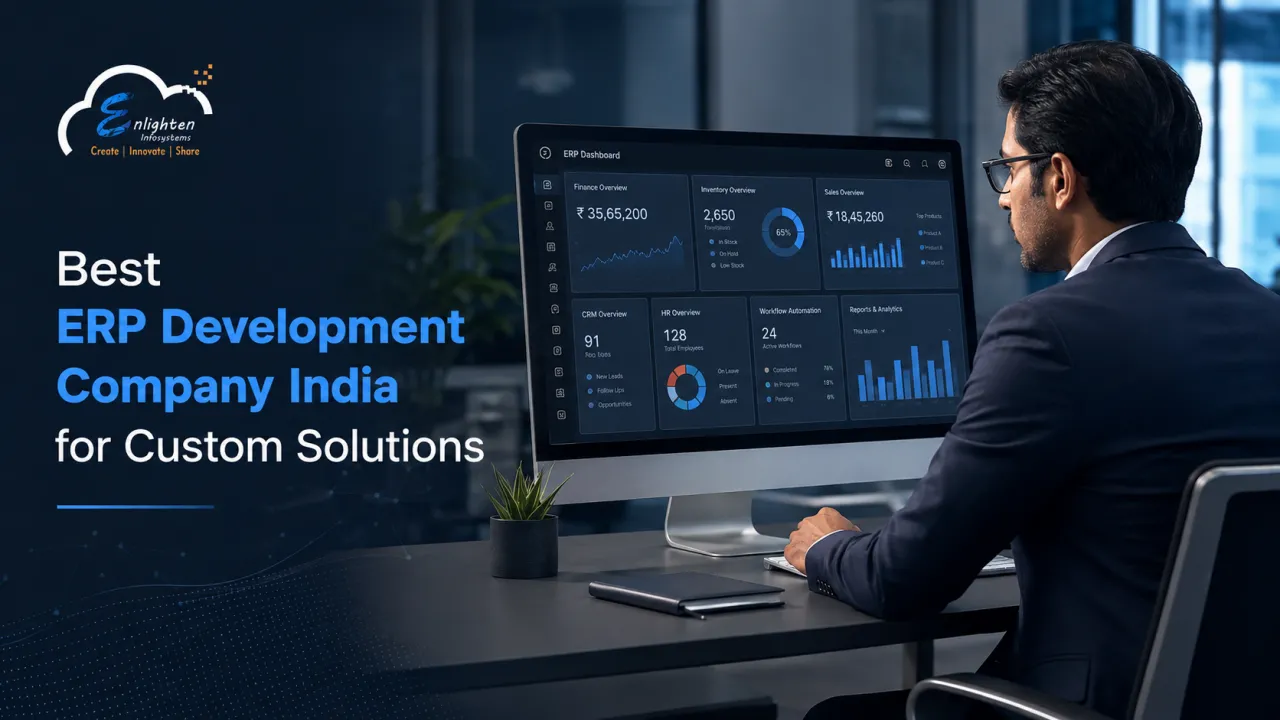
Why Custom ERP Software Development Is the Right Investment for Your Business            Introduction to ERP Software DevelopmentRunning a business today is not easy. There are many tasks like managing sales, tracking inventory, handling employees, and keeping records safe. Doing all this manually or using different tools can create confusion and waste time. This is where ERP software development becomes helpful. Many growing companies now prefer working with a trusted ERP Software Development Company in India or the best IT Company in Vadodara to build a system that fits their exact needs.A well-built ERP system helps connect all parts of a business in one place. It improves operational efficiency, reduces errors, and supports smooth business processes. In simple words, it helps you manage everything better.What is ERP Software?ERP stands for Enterprise Resource Planning (ERP). It is a type of business management software that helps companies manage their daily operations like finance, HR, inventory, and sales in one system.An ERP system collects and stores all data in one place. This makes data management easy and helps teams work together without confusion. Instead of using different tools, businesses use one system for everything.What Is Custom ERP Software Development?Custom ERP software development means building an ERP system specially designed for your business. Unlike ready-made software, it is created based on your company’s needs, goals, and business processes.With custom ERP software, you only get the features you need. This improves performance and supports better business automation and workflow automation. It is a part of custom software development, where solutions are made just for you.Core Components of Custom ERP Software Development Business Process Analysis and Planning Before starting software development, experts study your current business processes. This helps in understanding what needs improvement and how the ERP system should work. Custom ERP System Design The design phase focuses on creating a user-friendly User Interface (UI) and smooth User Experience (UX). The system is planned to match your workflow and make tasks easier. Module Development and Integration Different ERP modules like finance, HR, and inventory are developed and connected. This ensures proper ERP integration so all departments work together. Third-Party Integration Sometimes businesses use other tools. With API Integration, the ERP system can connect with external platforms like payment gateways or CRM tools. Data Migration and Upgradation Old data is moved into the new system safely. This improves database management and ensures smooth ERP implementation. System Security and Maintenance Security is very important. Strong cybersecurity measures protect your data. Regular updates and support keep the system running smoothly. Key Features of Custom ERP Software Centralised Data Management All business data is stored in one place. This improves data management and reduces errors. Flexible Customisation With system customisation, the ERP system can be changed anytime based on your needs. Real Time Reporting and Analytics Get real time data and insights using business intelligence tools. This helps in better decision making. Multi User Access and Role Management Different users can access the system based on their roles. This improves control and security. Scalable System Architecture A scalable system grows with your business. You can add new features and users anytime. Benefits of Custom ERP Software Development for Businesses Improved Business Efficiency Automation reduces manual work and improves operational efficiency. Cost-Effective Long-Term Solution Though initial cost may be higher, custom ERP software saves money in the long run by reducing errors and improving productivity. Better Data Security and Control You have full control over your data with strong IT infrastructure and security systems. Enhanced Decision Making With real-time analytics and reports, businesses can make better decisions quickly. Scalable Business Growth A custom ERP system supports growth and adapts to new changes easily. Why Custom ERP Is Better Than Ready Made ERP SolutionsReady-made ERP systems are designed for general use. They may include features you don’t need or miss important ones.On the other hand, custom ERP software is built for your business. It supports better ERP integration, smoother workflow automation, and fits perfectly into your operations. It also allows easy upgrades and better performance.How Custom ERP Software Helps Businesses GrowA strong ERP system supports digital transformation. It connects teams, improves communication, and reduces delays.With tools like cloud ERP and SaaS (Software as a Service), businesses can access their systems from anywhere. This improves flexibility and productivity.It also supports better business automation, helping companies focus on growth instead of manual work.How to Choose the Right ERP Development Company Check Experience and Portfolio Look for a company with experience in ERP software development and proven projects. Evaluate Custom Development Capabilities Make sure they offer proper custom software development and understand your business needs. Consider Support and Maintenance Good support after ERP implementation is important for long-term success. Review Security and Performance Standards Check if they follow proper cybersecurity practices and build high-performance systems. Future Trends in ERP Software DevelopmentERP systems are changing with new technology. Some trends include: Use of cloud computing for better flexibility Advanced real time data tracking Better software integration with other tools Mobile friendly web applications and mobile applications Improved business intelligence features These trends are helping businesses become faster and more efficient.Conclusion IT Companies in Vadodara for InternshipFor students and freshers who want to learn real-world skills, choosing the right company is important. Many learners look for opportunities in IT Companies in Vadodara for Internship to gain hands-on experience in software development, ERP systems, and modern IT solutions.Companies like Enlighten Infosystems provide practical training and exposure to live projects. This helps students understand how real ERP systems are built and how businesses use them daily.ConclusionInvesting in ERP software development is a smart decision for any growing business. A custom built ERP system helps manage operations smoothly, improves data management, and supports better decision making.With the right IT solutions, businesses can achieve higher efficiency, better control, and long term growth. Choosing custom ERP software ensures that your system works exactly the way your business needs.

ERP Solutions
Read
Understanding CMS Web Development Services for Business
06 Apr, 2026

Understanding CMS Web Development Services for Business

Introduction to CMS Web Development ServicesWhen I first started working on websites, I realised one simple thing managing a website should not feel complicated. A good website should be easy to update, simple to manage and flexible as your business grows. That’s exactly where CMS web development services come in.If you are planning a business website, you may also want to explore a reliable Web Design Company in Vadodara or even a CRM Development Company in Vadodara to support your full digital setup. These services together help build a strong digital presence and support online business growth.In this blog, I’ll explain everything in simple words so you can clearly understand how a content management system works and why it matters for your business.What Is a Content Management System (CMS)?A Content Management System is a tool that helps you create, edit and manage your website without needing coding knowledge.Think of it like this instead of calling a developer every time you want to change text or images, you can do it yourself using simple content editing tools.A content management system handles things like: Storing your website data (Database Management) Managing pages and blog posts Updating images and content It makes website content management easy for anyone, even beginners.What Are CMS Web Development Services?CMS web development services include everything needed to build and manage a website using a CMS platform.This includes: Planning your website structure (Website Architecture) Designing pages (Web Design) Developing features (Custom Website Development) Setting up Website Hosting and Domain Name These services focus on creating a business website that is easy to manage, secure and scalable.Core Components of CMS Web Development ServicesCMS Website Planning and Strategy Before starting website development, I always plan the structure first. This includes deciding pages, layout and user flow. A clear plan improves User Experience (UX) and overall Website Performance.Custom CMS Website Design A strong CMS website design focuses on both User Interface (UI) and usability. Every business is different, so custom CMS development ensures your website matches your brand.CMS Theme and Template Development Using CMS themes and templates or creating custom Website Templates helps build the website faster while keeping design consistent.Plugin and Extension IntegrationWith proper plugin integration, you can add features like forms, SEO tools and analytics. This improves Website Analytics and overall functionality.CMS Migration and UpgradationSometimes businesses move from one system to another. That’s where CMS migration helps transfer data safely without losing content.Website Security and Maintenance Regular website maintenance and strong website security are important to protect your data and keep your site running smoothly.Key Features of CMS Web Development ServicesUser Friendly Content Management A content management system makes updating content simple. With easy content editing tools, you don’t need technical skills.Flexible Website Customisation With proper website customization, you can change layouts, add features and update content anytime.SEO Friendly Website StructureA SEO friendly website helps improve your search engine ranking. Good structure and proper search engine optimization make your website easier to find online.Mobile Responsive Website DesignResponsive Web Design ensures your website works well on mobile, tablet and desktop devices.Multi User Access and PermissionsYou can give multi user access and set user permissions, so different team members can manage different parts of the site.Most Popular CMS Platforms for Business Websites WordPress CMS DevelopmentWordPress is the most popular CMS platform. It’s flexible and widely used for blogs and business websites. WordPress development is suitable for almost any type of website.Shopify CMS for EcommerceShopify is perfect for building an E-commerce Website. The shopify ecommerce platform is simple and ideal for online stores.Drupal CMS DevelopmentDrupal is known for strong security and flexibility. The drupal CMS is often used for large and complex websites.Magento CMS for Large Online StoresMagento is best for big online stores. The magento ecommerce platform supports advanced features and scalability.Joomla CMS Development Joomla offers a balance between flexibility and ease of use. The joomla CMS works well for business websites.Benefits of CMS Web Development Services for BusinessesEasy Website Content UpdatesWith a content management system, updating content becomes quick and simple.Cost Effective Website ManagementYou don’t need a developer for small changes, which reduces overall website management cost.Scalable Website ArchitectureA scalable website grows with your business without major changes.Better Website PerformanceGood CMS setup improves website performance, loading speed and user experience.Improved Search Engine VisibilityA well-built SEO friendly website improves your visibility and supports better search engine optimization.How CMS Web Development Services Help Businesses Grow Online From my experience, a properly built CMS website makes a big difference.I once worked with a small local store. They had a static website and struggled to update products. After switching to a CMS platform, they could manage everything themselves. Within a few months, their updates became regular, their website performance improved and their sales increased.That’s how CMS web development services support real online business growth.How to Choose the Right CMS Web Development CompanyCheck Experience and PortfolioAlways check past work in website development to understand their capability.Evaluate Custom Development CapabilitiesMake sure they offer custom CMS development and not just basic templates.Consider Technical Support and MaintenanceOngoing website maintenance and support are very important.Review Security and Performance StandardsFocus on website security and speed to ensure long-term success.Future Trends in CMS Web DevelopmentCMS platforms are becoming smarter with better automation, improved website scalability and advanced digital marketing integration.In the future, websites will be more personalised and easier to manage.ConclusionA content management system is one of the most important tools for modern businesses. It simplifies website management, improves flexibility and helps build a strong business website.If you want a website that is easy to manage, secure and ready to grow, investing in CMS web development services is the right step.From my experience, the right CMS setup not only saves time but also helps your business move faster online.

Web Development
Read
Best MERN Stack Developer Course & MERN Stack Training
20 Mar, 2026

Best MERN Stack Developer Course & MERN Stack Training

Best MERN Stack Developer Course & MERN Stack TrainingIf you are planning to build a career in web development, choosing the right course matters a lot. I remember when I first started looking for a good training program, I was confused with too many options. Then I came across a trusted IT Training Institute in Vadodara and things became much clearer. A well structured MERN full stack course can help you understand both front end and back-end, so you can build a complete web application from scratch without depending on others.MERN Stack Developer Course - Quick Summary Table Section Key Points Course Overview Learn complete MERN stack development from scratch, beginner friendly Tech Stack MongoDB (database), Express (backend framework), React (frontend library), Node.js (runtime) Curriculum Frontend (React), Backend (Node & Express), Database (MongoDB), Full Stack Integration, Deployment & Live Projects Highlights Project-based learning, hands-on apps, beginner to advanced, modern tools Training Types Online, Offline Classroom, Hybrid Certification & Career Certification after completion, placement assistance, freelance opportunities Jobs & Salary High demand in India & global, remote/freelance options Comparison with Other Stacks MERN vs MEAN, MERN vs Django, MERN vs traditional full stack Who Should Enrol Beginners, switching developers, aspiring MERN stack developers Course Overview of MERN Stack Developer Training A good MERN stack development course is not just about theory. It focuses on practical learning, real coding and solving real problems. The course is designed to help you understand how modern web development works in today’s industry.What this MERN stack course coversThe course covers everything from basics of JavaScript, HTML5 and CSS, to advanced topics like API building and deployment using node.js. You will also learn how a client server model works and how data flows inside a web application.Complete course curriculum breakdownYou will go step by step starting from frontend design, moving to backend logic and then connecting both. It includes working with Database systems like MongoDB and understanding API and HTTP communication.Why this MERN stack training course stands outWhat makes it different is the focus on real-time project work. Instead of only learning concepts, you actually build working apps using modern tools and follow best practices used in real companies.Introduction to MERN full stack developmentLearning the MERN stack means you are learning one of the most popular JavaScript stack options today. It covers everything needed to build modern, fast and scalable apps.Overview of MERN Stack and Tech Stack ExplainedWhat is the MERN tech stackMERN stands for MongoDB, Express, React and node.js. These are tools used together for stack development course learning and real-world software development.Role of MongoDB, Express, React, Node·         MongoDB: A NoSQL Database used to store data·         Express: A Web framework for backend development·         React: A Library (computing) for building UI·         node.js: A Runtime system to run JavaScript on the serverHow MERN stack development works in real-world appsIn real projects, like the ones handled by a web design company in Vadodara, developers use this stack to build fast and scalable web applications.Popular MERN stack uses·         E-commerce websites·         Dashboards and admin panels·         Social media platforms·         Mobile app development (with React-based tools)Why Choose a MERN Stack Developer Course in 2026 Growing demand for MERN stack developer rolesCompanies are moving towards modern technology stacks and MERN stack development is one of the top choices.Career scope as a full-stack developerWith MERN, you can become a full stack developer and work on both front end and back-end.Why companies prefer full-stack MERN developersMany IT Companies in Vadodara prefer developers who can manage both frontend and backend work.Who Should Take This MERN Stack Training Course ·         A beginner who wants to start in web development·         Developers switching from other technologies like PHP or MySQL·         Anyone aiming to become a MERN stack developerIf you are serious about learning the MERN, this course is a great start.MERN Stack Course Curriculum and Learning Path Frontend Development with ReactYou will learn UI design, User interface basics, Flexbox, Bootstrap (front-end framework) and how to handle Document Object Model.Backend Development with Node and ExpressYou will build server logic using node.js, create APIs and manage requests using HTTP.Database Handling with MongoDBYou will learn how to store and manage data using NoSQL, perform CRUD operations and handle Data Document structure.Full Stack IntegrationThis is where front-end and back-end come together. You will build complete web application projects.Deployment and Live ProjectsYou will host apps using Cloud computing and work on real-time project development.MERN Stack Course Highlights and Key Features ·         Project-based MERN full stack training·         Hands-on web development practice·         Beginner to advanced learning·         Updated tools and modern technologyTypes of MERN Stack Developer Training Available Choosing the right learning format depends on your daily routine, comfort level and how you like to study. Here are the main options:Online training (flexible learning)·         Learn from anywhere at your own pace·         Recorded + live sessions available·         Good for working professionals or students·         Easy to revisit topics like node.js and web developmentOffline classroom training·         Face-to-face learning with trainers·         Better for doubt solving and personal attention·         Structured environment helps maintain discipline·         Good if you prefer direct interaction while learning web application developmentHybrid learning options·         Mix of online + classroom sessions·         Flexibility with some in-person guidance·         Best for those who want both comfort and support·         Helps balance theory and practical web development practiceTip: Choose a format where you can stay consistent and practice regularly. That’s the key to learning and growing in this field.Best MERN Stack Courses to Learn Full Stack Development Choosing the right course can save you a lot of time and confusion. Focus on courses that give practical experience, not just theory.Beginner-friendly courses·         Start with basics like HTML, CSS and JavaScript·         Simple explanation of User interface and how a web application works·         Gradual introduction to React and node.js·         Best for anyone new to web developmentAdvanced MERN stack development programs·         Covers API creation, authentication and app security·         Deep learning of backend using node.js·         Focus on app performance and Scalability·         Helps you think like a real developerReal world project-based courses ·         Work on real projects like dashboards or e-commerce apps·         Learn how front end and back end connect·         Build a complete web application from scratch·         Strong focus on hands-on coding and problem solvingTip: Always choose a course that includes live projects and practical training. That’s what really helps you grow in web development.Certification and Growth OpportunitiesAfter completing the training, you can get a MERN stack developer certification. This helps improve your resume and gives you better job opportunities.Many institutes also provide placement assistance, helping you start your career faster.MERN Stack Jobs, Salary and Career ScopeDemand for MERN stack developersThere is a high demand for MERN developers in India and globally.Salary trendsFresher’s can start with a decent salary and with experience, it grows quickly.Freelancing and remote opportunitiesYou can work remotely, freelance, or even build your own products.MERN Stack vs Other Full Stack TechnologiesMERN vs MEANThe mean stack uses Angular instead of React. Both are good, but React is more flexible.MERN vs DjangoDjango uses Python, while MERN uses JavaScript everywhere.MERN vs traditional full stackTraditional stacks involve multiple languages, while MERN uses a single Programming language.How to Choose the Right MERN Stack Training Course Before you enrol, check:·         Course structure and Curriculum·         Real-world projects·         Trainer experience and mentorship·         Tools and Technology usedA Small Real-Life ExampleWhen I was learning the MERN stack, I built a simple task manager app. At first, it was just basic HTML and CSS. Then I added React for the interface, Node.js for the backend, and MongoDB for storing data. That one project helped me understand how everything connects in real life. That’s when things really started making sense.

General
Read
Understanding the CRM Process: 5 Steps to Better Customer Relationships
16 Mar, 2026

Understanding the CRM Process: 5 Steps to Better Customer Relationships

Understanding the CRM Process: 5 Steps to Better Customer Relationships When I talk to business owners, one problem comes up again and again. They say they are getting enquiries, but they are not able to manage customer relationships properly. Messages come from Email, phone calls and social media and somewhere along the way important details get lost.This is where Customer relationship management becomes important. Businesses today use CRM technology to keep all customer information in one place and track customer interactions from the first enquiry to after sales support. Companies that want better customer satisfaction often work with a professional CRM development company in Vadodara that can build the right system for their needs.In simple words, CRM helps a company understand the customer journey, improve communication and turn a potential customer into a loyal customer.What Is CRM as a Process?Many people think CRM is just CRM software. But it is much more than that.CRM is actually a business process used for managing customers, tracking their behaviour and improving the overall customer experience.It involves collecting data, understanding consumer behaviour and using that information to create better marketing strategies and stronger relationships with customers.A good CRM process also helps businesses improve operational efficiency because all customer interactions and tasks follow a structured workflow.What Is the Customer Relationship Management Process?The customer relationship management process is the way a business tracks and manages the full customer lifecycle.It starts when a new customer first contacts the company and continues even after they buy a product or service.This process helps a company: understand customer needs improve customer engagement organise sales and marketing increase customer acquisition build long-term customer loyalty In short, it helps businesses manage customer relationships in a better and more organised way.What Are the 5 Steps in the CRM Process? The CRM process follows several key steps that help businesses organise their sales process and improve customer relationships.These key steps guide how companies collect data, communicate with customers and build long-term loyalty.Step 1: Collect Customer DataThe first step is collecting customer information.Businesses gather data from many sources: website forms Email marketing sign-ups social media messages online chat enquiries All this data is stored inside a CRM tool or CRM technology platform. The goal is simple: understand who the target audience is and what they are looking for.This step also involves proper data entry and strong data management so information is accurate and easy to find later.Step 2: Analyse Customer BehaviourOnce the information is collected, businesses study it using analytics and machine learning tools.This helps companies understand consumer behaviour and patterns such as: which products customers like how often they purchase how they respond to marketing campaign messages With this knowledge, companies can design better marketing strategies and improve the sales process.Step 3: Improve Customer EngagementAfter analysing the data, the next step is improving customer engagement.Businesses communicate with customers through: Email marketing social media online chat follow-up calls These actions help businesses create targeted marketing and personalised messages.For example, instead of sending the same offer to everyone, a company can send targeted marketing emails to people who showed interest in a specific service.This improves customer satisfaction and builds trust with the brand.Step 4: Convert Leads into CustomersThe next step is converting leads into buyers.During this stage, businesses focus on lead management and proper on boarding.The goal is to turn a potential customer into a new customer through strong communication and helpful support.Good CRM automation tools can remind sales teams to follow up, schedule calls and track conversations.This helps the company move leads smoothly through the CRM cycle.Step 5: Retain Customers and Build LoyaltyGetting a sale is not the end of the process.Smart companies focus on customer retention and long-term retention.They keep engaging with an existing customer through updates, offers and support. When customers feel valued, they become a loyal customer and sometimes even recommend the brand to others.This increases customer lifetime value and creates strong brand loyalty.How CRM Process Works in Real Businesses Let me share a simple example.One small company in Vadodara providing IT Services in Vadodara was struggling to track enquiries coming from their website and social media.Before CRM, they used spreadsheets. Many customer interactions were missed and some new customer enquiries never received a reply.After implementing a CRM system with marketing automation, they could see all leads on one dashboard (computing). They started sending email marketing follow-ups and tracking the customer journey.Within a few months, they improved customer retention and many clients became a loyal customer who continued working with them.What Are Common CRM Processes?Some common CRM processes include: lead management data management customer communication tracking marketing automation customer support management A/B testing for campaigns These processes help companies maintain visibility across all customer activities.What Are the 4 Types of CRM Systems?Most businesses use four main CRM systems: Operational  CRM - helps automate daily tasks and workflows Analytical  CRM - focuses on analytics and predictive analytics Collaborative  CRM - improves communication between departments Strategic  CRM - supports long-term strategic planning These systems often use artificial intelligence and machine learning to improve results.What Are the Stages of CRM?The main stages of CRM include: Customer acquisition Customer engagement Sales conversion Customer support customer retention These stages together form the CRM cycle that businesses repeat continuously.How to Implement a CRM Process?To implement a CRM process successfully, businesses should follow these steps: choose the right software and technology define clear marketing strategies train the team through proper education connect  CRM with tools like Slack (software) and Zapier ensure compliance with rules such as General Data Protection Regulation Sometimes companies also integrate CRM with enterprise resource planning systems to improve operations.What Are the Benefits of the CRM Process?A well-structured CRM process helps businesses: improve customer experience increase customer loyalty build strong brand reputation improve operational efficiency track performance indicators support better decision-making It also helps businesses manage both a new customer and an existing customer more effectively.Is CRM a Business Process?Yes, CRM is a structured business process.It combines technology, data and strategy to help companies build better relationships with customers.When used properly, CRM improves customer engagement, strengthens the brand and supports long-term business growth.What Is the CRM Process Cycle?The CRM cycle is the ongoing process of attracting, converting and keeping customers.This CRM cycle includes: lead generation sales conversion customer support retention When businesses repeat this CRM cycle, they continue building trust and stronger relationships with customers.

CRM Software
Read